Ecotika
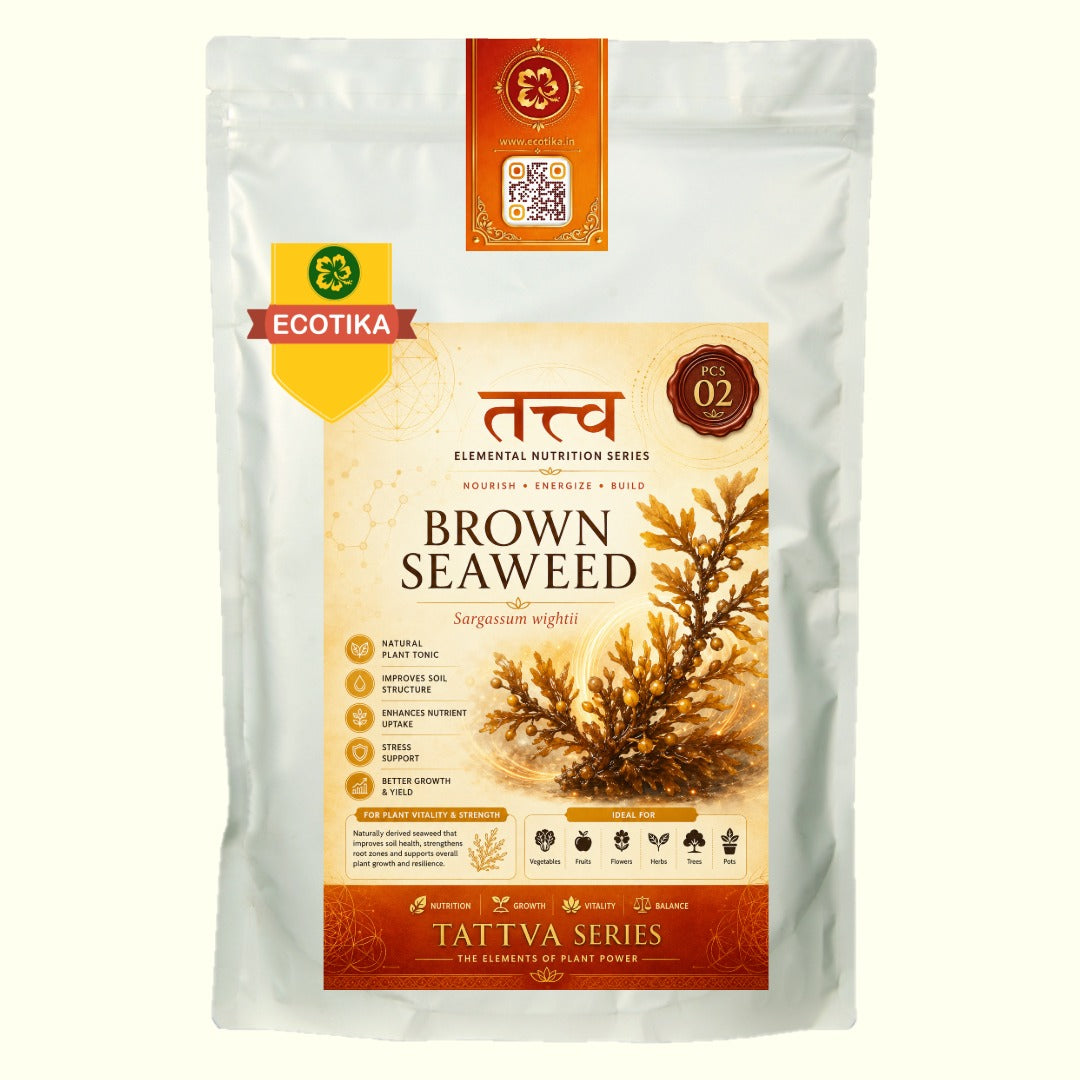
Ecotika Brown Seaweed -Sargassum for Plants
Ecotika Brown Seaweed -Sargassum for Plants
Couldn't load pickup availability
Brown Seaweed is a Tattva Series Plant Care Solution based on raw sun-dried Sargassum seaweed.
Its role is different from a conventional concentrated nutrient product. It is best considered a natural biological and plant-support input that complements a complete nutrition and cultivation programme.
Supporting overall plant vitality
Healthy plant growth depends on adequate nutrition, functioning roots, sufficient light, appropriate moisture and suitable environmental conditions.
Seaweed-based inputs can be incorporated into this broader programme to support overall plant vitality.
Supporting the root zone
A healthy root system is fundamental to nutrient and water uptake.
Brown Seaweed can be used as part of a root-zone management programme alongside suitable growing media, adequate drainage and appropriate irrigation.
Supporting plants during active growth
Plants undergo periods of rapid vegetative development, flowering and fruit production.
A seaweed-based input can complement the plant-care programme during these active growth phases without being treated as a replacement for essential plant nutrients.
Supporting plants under variable growing conditions
Plants may encounter temporary environmental challenges such as transplanting, heat, fluctuations in moisture or changes in growing conditions.
Good horticultural practice should always address the underlying stress first. Brown Seaweed can be incorporated as a supportive input rather than being presented as a cure for environmental stress.
Seaweeds are naturally occurring marine biological materials containing a complex mixture of naturally occurring compounds and mineral elements.
Brown Seaweed provides gardeners with a simple, minimally processed seaweed-based input that can be incorporated into a broader plant-care programme.
Natural marine-derived input
The product is based on raw sun-dried Sargassum seaweed, retaining the naturally occurring characteristics of the harvested seaweed.
Supports plant vitality
Seaweed-based products are commonly used in horticulture as biostimulant-type inputs to complement conventional plant nutrition and help plants maintain healthy growth under suitable growing conditions.
Suitable for a wide range of plants
Because Brown Seaweed is not positioned around a single crop, it can be incorporated into the care programme for:
· Flowering plants
· Ornamental plants
· Vegetables
· Fruit plants
· Herbs
· Container plants
· Home gardens
Brown Seaweed is intended to support plant-care programmes where gardeners are looking for:
· Natural marine-derived plant inputs
· General plant vitality support
· Root-zone support
· Support during active plant growth
· Complementary care for flowering plants
· Complementary care for vegetables and fruit plants
· A natural input alongside a structured nutrition programme
It should not be positioned as a cure for nutrient deficiencies, pests, diseases, poor drainage or inadequate sunlight.
Dosage:
|
Growing Environment |
Pot / Plant Spec |
Dosage per Application (Grams) |
Approximate Visual Equivalent |
|
Small Pot |
6–8 inch diameter |
5 – 10 g |
~1 to 2 tsp |
|
Medium Pot |
10–12 inch diameter |
15 – 20 g |
~1 to 1.5 tbsp |
|
Large Pot |
14–16 inch diameter |
25 – 35 g |
~2 tbsp |
|
Extra Large / Tub |
18+ inch diameter |
40 – 50 g |
~3 to 3.5 tbsp |
|
In-Ground Bed |
Young Shrub / Small Perennial |
35 – 50 g |
~2.5 to 3.5 tbsp |
|
In-Ground Bed |
Established Bush / Medium Garden Bed |
75 – 100 g |
~1/3 to 1/2 cup |
|
In-Ground Bed |
Fruit Trees / Large Specimen Canopy |
150 – 250 g |
~3/4 to 1.25 cups |
2. Application Frequency & Seasonal Schedule
- Active Growth & Rooting Phase (Spring to Early Summer): Apply every 30 to 45 days to stimulate root mass growth, enhance stress resistance, and improve micro-nutrient bio-availability.
- Pre-Monsoon / Heat Stress Recovery: Apply 1 dose prior to peak summer or extreme weather conditions to act as a natural biostimulant against abiotic stress.
- Monsoon / Rainy Season: Apply every 45 days; natural alginates in Sargassum help improve soil water-retention and prevent nutrient leaching.
- Winter / Slow Growth Period: Apply once every 60 to 90 days to maintain rhizosphere microflora without pushing forced forced leaf flushes.
- Potting Substrate Preparation: Blend 10–15 grams per 10 liters of soil mix to enrich organic matter and soil microbial activity prior to potting.
3. Best Practices for Soil Application
- Topsoil Loosening (Godi): Lightly scratch the upper 1–2 inches of soil around the root zone to create an even surface for incorporation.
- Peripheral Ring Scattering: Broadside the raw seaweed granules/flakes in a ring around the drip line (outer leaf canopy radius), avoiding direct contact with the central stem.
- Soil Incorporation & Mulching Cover: Mix lightly into the top layer of soil or cover with a thin layer of compost/mulch. Being organic Sargassum seaweed meal, soil contact accelerates bio-decomposition by beneficial soil microflora.
- Immediate Watering: Water thoroughly right after application to soften the sun-dried seaweed matrix and activate the release of natural auxins, cytokinins, and trace minerals.
Manufactured, Packed & Dispatched by: Ecotika
Share